
Membrane support mesh in polyester and nylon monofilament
Precision woven polyester (PET) and nylon (PA6, PA66) monofilament mesh used as the backing and reinforcement layer of thin membranes. Cast or laminated onto the mesh, the membrane gains tensile strength, flatness and dimensional stability, while the monofilament fabric sheds no fibres and keeps the opening geometry uniform across the roll.
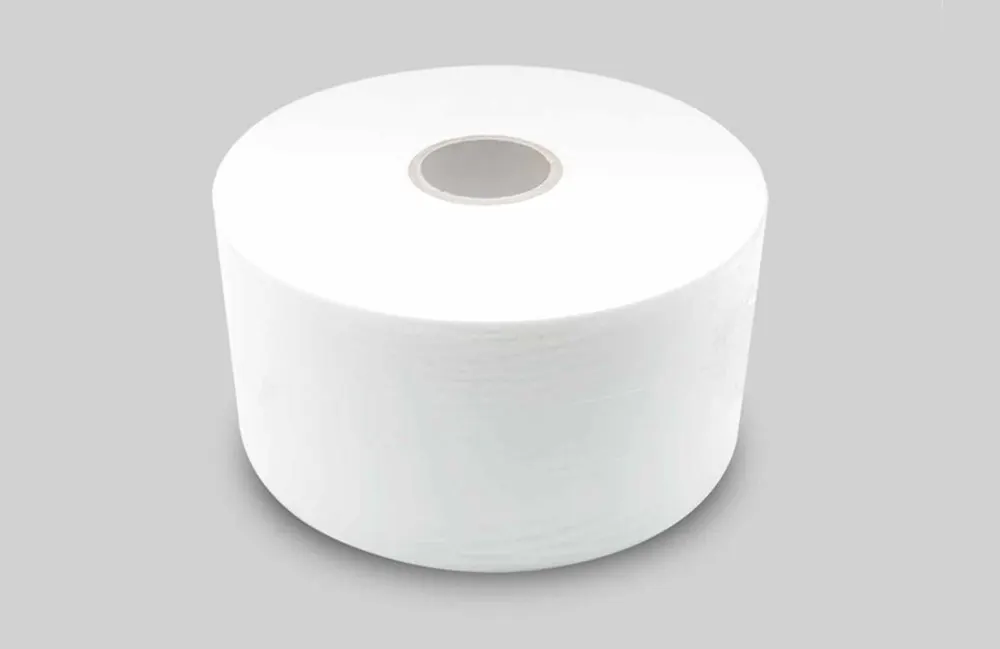
Supply range
| Item | Specification |
|---|---|
| Materials | Polyester (PET); nylon PA6 and PA66 |
| Construction | Plain-weave monofilament, heat-set after weaving |
| Mesh opening | Membrane grades 40-200 µm; full range 5-1,900 µm on request |
| Thread | PET from 26 µm; PA from 30 µm |
| Width | Slit to any width from 10 mm to 3,700 mm |
| Roll length | Up to 1,000 m (3,300 ft) continuous, for casting and laminating lines |
| Compliance | PET: US FDA 21 CFR 177.1630, EU RoHS. Nylon PA6: US FDA 21 CFR 177.1500, EU RoHS (SGS tested) |
Why woven monofilament support mesh
No loose fibres
Every thread is a single continuous filament, so nothing stands up to puncture a thin membrane layer.
Uniform openings
A defined opening and open area give even polymer penetration and even flux across the sheet.
Dimensionally stable
PET absorbs about 0.4 % moisture and is heat-set, so the mesh stays flat in wet casting and thermal lamination.
Slit to your line
Widths from 10 mm to 3,700 mm and continuous rolls up to 1,000 m cut splices and edge waste.
Standard membrane support grades
Mesh count, open area and thickness are nominal values calculated from thread and opening. The mesh is not calendered: thickness is about twice the thread diameter. Measured values are reported with every order.
| Code | Material | Mesh /cm | Mesh /in | Thread µm | Opening µm | Open area % | Thickness µm | Typical use |
|---|---|---|---|---|---|---|---|---|
| MS-PET-40/25 | PET | 125 | 318 | 40 | 40 | 25 | 80 | Flat sheet UF / NF / RO casting |
| MS-PET-40/35 | PET | 149 | 379 | 27 | 40 | 36 | 55 | Thin medical and diagnostic membranes |
| MS-PET-57/47 | PET | 120 | 306 | 26 | 57 | 47 | 50 | Electrolyzer and ion-exchange membrane reinforcement |
| MS-PET-64/45 | PET | 104 | 265 | 32 | 64 | 44 | 65 | Thin laminated membranes |
| MS-PET-105/52 | PET | 68 | 173 | 42 | 105 | 51 | 85 | Laminated membrane reinforcement |
| MS-PET-120/50 | PET | 58 | 148 | 52 | 120 | 49 | 105 | Laminated membrane reinforcement |
| MS-PET-150/41 | PET | 42 | 108 | 86 | 150 | 40 | 170 | Flat sheet and MBR membrane backing |
| MS-PET-200/39 | PET | 31 | 79 | 121 | 200 | 39 | 240 | Pleated membrane cartridge support |
| MS-PA-64/45 | PA66 | 103 | 262 | 33 | 64 | 44 | 65 | Alkaline service, thin membranes |
| MS-PA-100/44 | PA66 | 66 | 168 | 51 | 100 | 44 | 100 | Alkaline service, laminated |
| MS-PA-170/54 | PA66 | 43 | 109 | 62 | 170 | 54 | 125 | Alkaline cleaning, membrane backing |
Polyester or nylon?
| Property | Polyester (PET) | Nylon (PA6 / PA66) |
|---|---|---|
| Moisture absorption | About 0.4 %; stays flat in wet processes | 3.5-4.5 %; may swell when wet |
| Max. dry working temperature | About 150 °C | About 115 °C |
| Acids | Good | Limited |
| Alkalis | Moderate | Good |
| Elasticity, abrasion | Low elongation, stiff | More elastic, good abrasion resistance |
| Best for | Membrane casting, thermal lamination, acid cleaning | Alkaline processes and cleaning, flexing parts |
Applications
| Application | Material | What the mesh does |
|---|---|---|
| Flat sheet MF / UF / NF / RO / FO membranes | PET | Backing fabric for casting and interfacial polymerization; lower open area limits dope penetration |
| Laminated membranes (ePTFE, PES, PVDF) | PET; PA for alkaline service | Reinforcement bonded by heat, adhesive or ultrasonics |
| Pleated membrane cartridges | PET, PA | Upstream and downstream support and drainage layers |
| Electrolyzer and ion-exchange membranes | PET | Fine, high open-area reinforcement |
| Medical and diagnostic devices | PET, PA66 | Thin support and flow layers |
| Venting and acoustic membranes | PET, PA | Thin, die-cuttable support |
Finishing and test reports
| Item | Specification |
|---|---|
| Heat setting | Every roll is heat-set after weaving to relieve weaving stress and limit shrinkage |
| Thermal shrinkage | Within 10 %, confirmed against your process temperature |
| Inspection | Mesh count, opening, thread, thickness, weight and tensile strength checked on every order |
| SGS NGBHL26006177501 | PET, US FDA 21 CFR 177.1630 chloroform-soluble extractives: Pass (July 2026) |
| SGS CKGEC26001073003 | PET, EU RoHS (EU) 2015/863: Pass (July 2026) |
| SGS NGBHL26006177401 | PA6, US FDA 21 CFR 177.1500: Pass (July 2026) |
| SGS CKGEC26001073001 | PA, EU RoHS (EU) 2015/863: Pass (July 2026) |
| Quality system | ISO 9001:2015, certificate 03526Q1083R201, valid to 2029 |
How to specify
- Membrane type and process: casting, thermal lamination, adhesive lamination or ultrasonic bonding
- Material: PET, PA6 or PA66, and any chemical cleaning (pH range, chlorine, solvents)
- Target mesh opening, open area and finished thickness
- Process or lamination temperature
- Roll width or slit widths, roll length and core size
- Compliance needed: FDA, RoHS or other
- Annual volume and destination port
Opening, open area and thickness decide the result, not thread diameter. To match a mesh you use today, send us a sample or its opening, open area and finished thickness. Lead time: production 45-50 days; samples about 10 days.
Full data in the catalogue. Specifications, tolerances, materials and inspection for all six support media are in the MAISHI Filter Support Mesh Catalogue (PDF, 32 pages, 1.7 MB).
Related support media
Matching an existing membrane backing?
Send the opening, open area, thickness and your process temperature. We confirm a grade and quote rolls slit to your width.
Frequently asked questions
What is membrane support mesh?
A precision woven polyester (PET) or nylon (PA6, PA66) monofilament fabric used as the backing and reinforcement layer of a thin membrane. The membrane is cast or laminated onto the mesh, which adds tensile strength, flatness and dimensional stability without shedding fibres.
Polyester or nylon: which should I choose?
Polyester absorbs about 0.4 % moisture and stays flat in wet casting and thermal lamination, and resists acids well. Nylon (PA6 / PA66) is more elastic and resists alkalis, so it suits alkaline processes and alkaline cleaning.
Is the mesh food-contact compliant?
Yes. SGS test reports from July 2026 confirm PET to US FDA 21 CFR 177.1630 and PA6 to US FDA 21 CFR 177.1500, and both PET and PA to EU RoHS (EU) 2015/863. Reports are available on request.
What widths and roll lengths are available?
Any width from 10 mm to 3,700 mm, and continuous rolls up to 1,000 m (3,300 ft) for casting and laminating lines.
What is the lead time?
Production 45-50 days; samples about 10 days.